Effective Proxy IP Rotation: Avoid Blocks in 2026
Master proxy IP rotation for web scraping, arbitrage, and account farming. Learn strategies, implementation, and best practices to avoid blocks in 2026.

You launch a batch of Facebook ad accounts from clean browser profiles. The creatives are fine. Billing is warm. Then review delays start, logins get challenged, and a few accounts die after the first serious spend push. Or you run a scraping job that worked last month, and now every few requests hit CAPTCHAs and soft blocks.
That usually isn't a creative problem or a code problem. It's an identity problem. More specifically, it's often an IP pattern problem.
For traffic arbitrage teams, cloakers, account farmers, and antidetect browser users, proxy IP rotation isn't a checkbox. It's a control layer. If you set it wrong, AdsPower profiles burn, TikTok sessions break, and geo-targeted checks stop reflecting what real users see. If you set it right, your traffic spreads naturally, your sessions stay stable when they need to, and your proxy spend goes to the jobs that need better trust.
Table of Contents
- Why Standard Proxies Fail at Scale
- Core Rotation Strategies Per-Request vs Sticky Sessions
- Choosing the Right Proxy Pool for Rotation
- Implementation Patterns and Configuration
- Integrating Rotation with Antidetect Browsers
- Best Practices for High-Value Workloads
- Troubleshooting Common Rotation Pitfalls
Why Standard Proxies Fail at Scale
Static proxies fail the moment your workload starts to look repetitive. One IP logs into too many Facebook accounts. One exit point refreshes too many TikTok pages. One source keeps hitting the same product catalog or search result pages. Platforms don't need a perfect model to flag that. They just need enough repeated traffic from the same address.
Proxy IP rotation fixes that by changing the outgoing IP automatically at fixed intervals or after a set number of requests. That shift moved from niche anonymity use into standard anti-blocking practice as platforms tightened rate limits and bot defenses, making automatic IP cycling a practical requirement for high-volume collection and automation, as described in this overview of proxy IP rotation mechanics.
If you're running cloaking checks, ad verification, account warmup, or scraper fleets, the problem isn't only volume. It's footprint density. Static IPs concentrate all your behavior into one identity. Rotating proxies distribute that behavior across a pool, which lowers how much any single IP stands out.
What usually breaks first
On sensitive platforms, the first failure rarely looks dramatic. It looks like friction.
- Login friction: Facebook and TikTok challenge sessions that keep shifting behavior under one IP or switch identity too abruptly.
- Review friction: Ad accounts get extra checks when the account history, browser profile, and location signals don't line up.
- Collection friction: Scrapers get throttled, served alternate pages, or pushed into CAPTCHA loops.
Standard proxies often work in testing and fail in production because test volume doesn't create the same repetition pattern.
A lot of teams misread this and keep replacing accounts, browser fingerprints, or landing pages. Sometimes those are the issue. Often the IP layer is the obvious weak point.
Why firewalls and anti-bot systems catch static traffic
Firewalls don't only block bad payloads. They also react to repeated patterns. If the same address keeps showing up across sessions, regions, or account actions, it becomes easier to classify. That's why understanding how proxies interact with filtering and perimeter controls matters for automation stacks, especially if you're also routing through strict edge defenses. A useful technical primer is Sota Proxy's write-up on proxy servers and firewalls.
For real operations, the rule is simple. If the workload doesn't need one stable identity, don't force all traffic through one IP.
Core Rotation Strategies Per-Request vs Sticky Sessions
Most failures with proxy IP rotation come from choosing the wrong rotation model, not from choosing the wrong provider. The two models that matter are per-request rotation and sticky sessions. Pick the wrong one and you either leak identity across too many actions or destroy session continuity mid-task.
Rotating proxies change the exit IP automatically either per request or on a time interval, which reduces the pattern correlation that anti-bot systems build from repeated traffic on one address, as explained in this rotating proxy glossary.
Per-request rotation
Per-request rotation gives you a fresh IP on each connection. This is the model for jobs where the target doesn't care who you are from one request to the next.
Think price scraping, SERP collection, ad verification page fetches, public page parsing, and broad reconnaissance across many URLs. If a target session doesn't require a persistent cookie-to-IP relationship, fast rotation usually works better than trying to preserve identity.
Use it when:
- Session continuity doesn't matter: Public pages, catalog pages, search pages.
- Request distribution matters more: You need to spread load across a pool.
- You expect rate-limits: Repeated hits from one source will get noticed quickly.
Avoid it for logged-in workflows. If a Facebook Business Manager session starts on one IP and continues on another seconds later, you're creating your own security event.
Sticky sessions
Sticky sessions keep the same IP for a set time window. That's often the safer setup for Facebook ad accounts, TikTok profiles, warmed social accounts, and any flow inside AdsPower, Dolphin Anty, GoLogin, Multilogin, or Hidemyacc where account continuity matters more than raw freshness.
Many beginners get burned. They hear "rotate more" and assume more rotation means more safety. It doesn't. In account operations, random mid-session rotation is exactly what you don't want.
Practical rule: If a human would keep one network identity during the task, your browser profile should too.
Sticky sessions are usually the right fit for:
- Ad account management: Review, spend changes, billing checks, creative swaps.
- Account farming: Registration, email confirmation, early activity, trust building.
- Geo-targeted manual work: Logging into region-bound accounts and keeping the same local exit during the session.
If you're also evaluating IPv6 options for bulk operations, this guide on IPv6 proxy service trade-offs is useful because address type changes how some pools are filtered, even when the rotation logic itself is sound.
Rotation Strategy Comparison
| Strategy | Mechanism | Best For | Avoid For | Risk Profile |
|---|---|---|---|---|
| Per-request | New IP on each connection | Public scraping, price monitoring, ad verification fetches, large parsing jobs | Facebook logins, TikTok account sessions, checkout flows, account farming | Low per-IP density, higher session break risk |
| Sticky session | Same IP for a timed window | AdsPower and GoLogin profiles, Facebook and TikTok ad accounts, social account warmup, geo-local manual work | Very high-frequency scraping where each request can stand alone | Better continuity, higher risk if one sticky IP gets overused |
The decision isn't abstract. Ask one question: Does this task need continuity or distribution? If it needs continuity, go sticky. If it needs distribution, rotate faster.
Choosing the Right Proxy Pool for Rotation
Rotation strategy only answers half the problem. The other half is what kind of IP you're rotating. A bad pool with perfect rotation still fails on sensitive targets.
Modern rotating proxy networks now operate at serious scale. Some market-facing providers advertise 32 million+ ethically sourced IPs across 195+ countries, and country, state, and city targeting has become standard for workflows like ad verification and market research, according to this overview of rotating proxy networks.
Trust starts with where the IP comes from
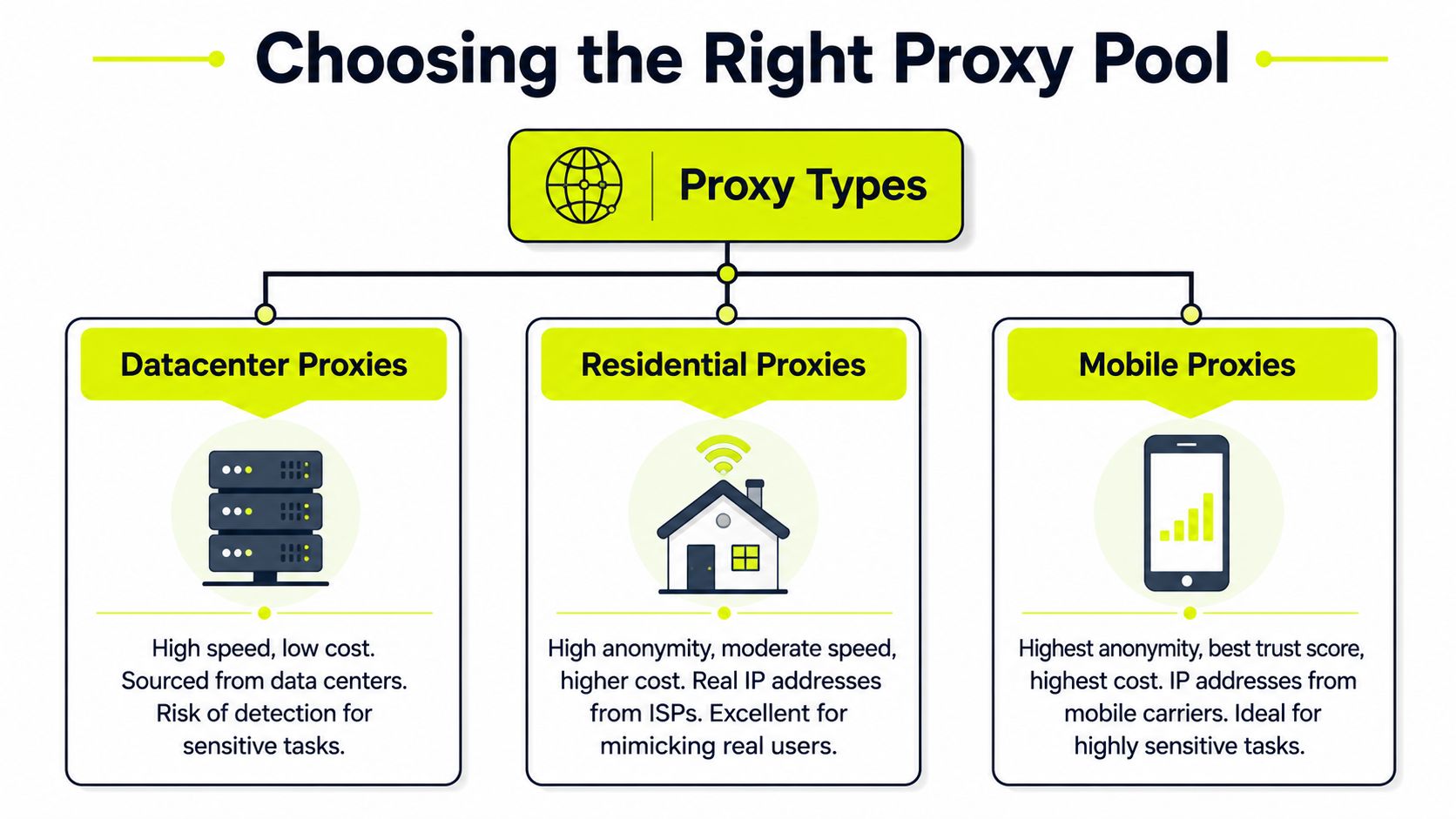
Datacenter proxies are fast and operationally simple. They're fine for low-sensitivity scraping, QA checks, monitoring, and targets that don't care much about ASN reputation. The downside is obvious to anyone who's run automation against Facebook, TikTok, Google, or major ecommerce sites. Datacenter ranges often look commercial from the start.
Residential proxies look more natural because they originate from ISP space tied to real consumer connectivity. For account creation, account farming, ad account management, and cloaking verification, that usually matters more than raw speed.
Mobile proxies sit even higher on the trust ladder for app-sensitive or social-heavy workflows. TikTok especially tends to behave better when the network identity looks like actual mobile usage instead of server traffic.
ISP proxies sit in an interesting middle ground. They often work well when you need a stable identity with better trust than datacenter and less churn than rotating residential. For long-lived sessions, they can be cleaner than forcing residential rotation where no rotation is needed.
How to map pool type to task
Don't ask which proxy type is best. Ask which failure you can tolerate.
- Datacenter proxies: Good when speed and cost matter most, and blocks are acceptable or manageable.
- Residential proxies: Better when platform trust matters and browser profiles need to look human.
- Mobile proxies: Better for highly sensitive social workflows and mobile-first targets.
- ISP proxies: Better when you want static or near-static behavior with consumer-looking reputation.
- IPv6 proxies: Useful on targets that support them well, but they aren't a universal replacement for residential trust on ad platforms.
If you're checking geo-targeted creatives, city-level matching often matters more than raw rotation speed.
For cloaking and arbitrage teams, geo matters as much as pool type. A US ad account reviewed from a mismatched region raises more suspicion than one viewed through a stable local exit. The same applies when verifying landing page variants or ad render differences across states and cities.
Implementation Patterns and Configuration
At the implementation level, a backconnect gateway is commonly employed. You authenticate once against the gateway endpoint, and the provider handles which exit IP you receive based on your rotation settings. That keeps your scripts and browser profiles simple.
Backconnect gateway pattern
For command-line testing, a basic check looks like this:
curl --proxy user:pass@gate.sotaproxy.com:port http://ip-api.com/json
Run it more than once. If you're on per-request rotation, the reported IP should change across connections. If you're on a sticky session, it should stay stable for the duration of the session window.
That single test catches a lot of bad assumptions. Teams often think they're on sticky when they're rotating on reconnect, or they think they're rotating when their client is reusing one session token.
Python requests pattern
For scripts, keep the setup explicit:
import requests

proxies = {
    "http": "http://user:pass@gate.sotaproxy.com:port",
    "https": "http://user:pass@gate.sotaproxy.com:port"
}

response = requests.get("http://ip-api.com/json", proxies=proxies, timeout=30)
print(response.text)
If you need sticky behavior, keep the same proxy credentials or session identifier pattern your provider expects. If you need per-request rotation, don't cache connections longer than necessary. In scraping pipelines, connection reuse can accidentally reduce rotation even when the gateway supports it.
Dashboard settings that matter
Most proxy dashboards expose the same operational controls even if the UI differs. You pick the pool type, the geography, and whether the session rotates per request or stays sticky for a time window.
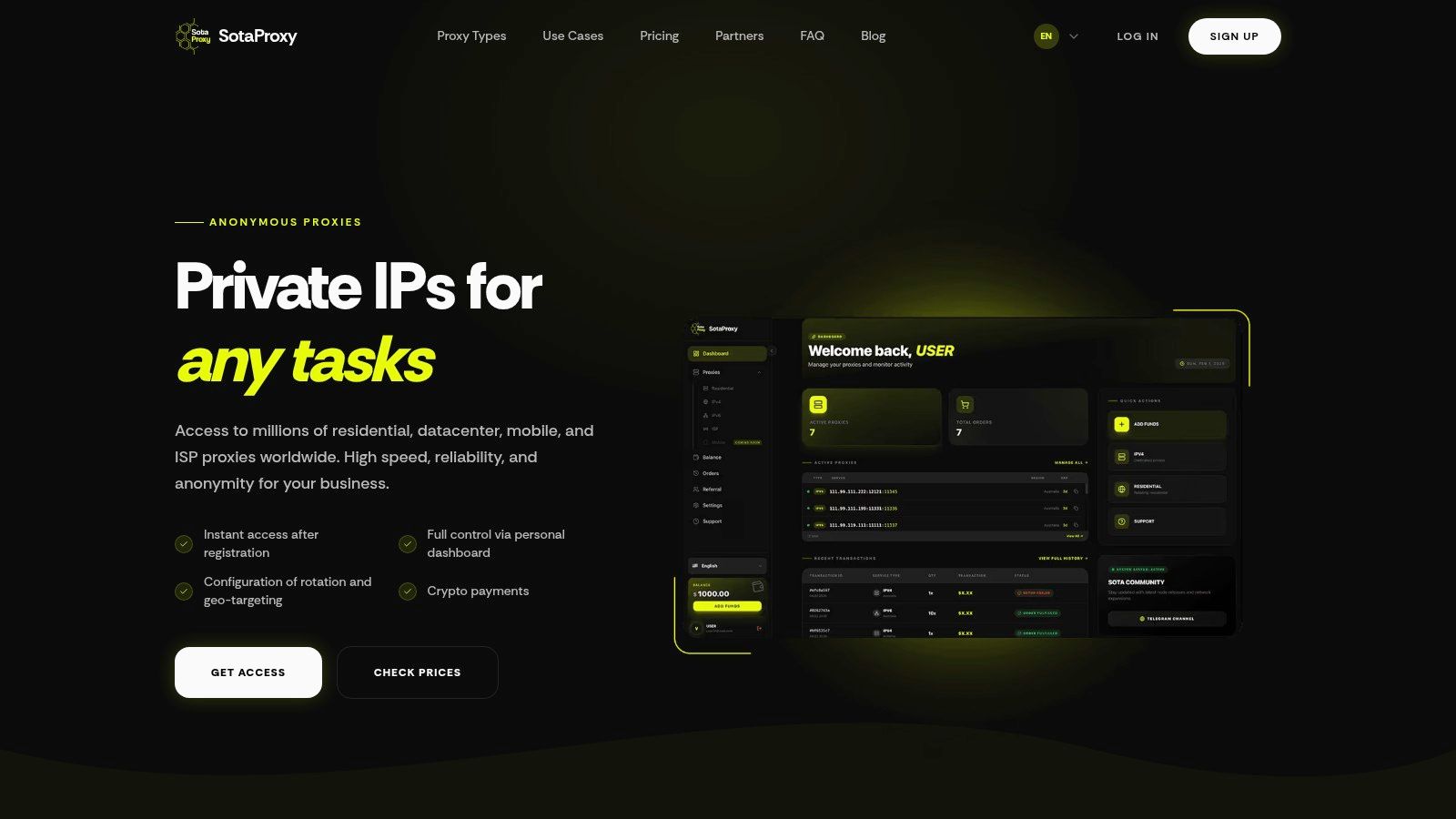
When you configure a dashboard, check these first:
- Proxy type: Residential, mobile, ISP, datacenter, or IPv6.
- Geo target: Country, region, or city if the task is location-sensitive.
- Rotation mode: Per-request for stateless collection, sticky for account sessions.
- Session duration: Long enough to finish the workflow without identity drift.
- Protocol: HTTP or SOCKS5 based on the tool you're using.
A lot of users can operate these settings without building their own proxy layer, which is why managed dashboards are popular. If you want the server-side view of how these systems are assembled, Sota Proxy has a practical guide on how to make a proxy server.
The mistake isn't complicated configuration. It's skipping validation. Always test the actual rotation behavior before you put the setup into AdsPower, a scraper, or a campaign verification tool.
Integrating Rotation with Antidetect Browsers
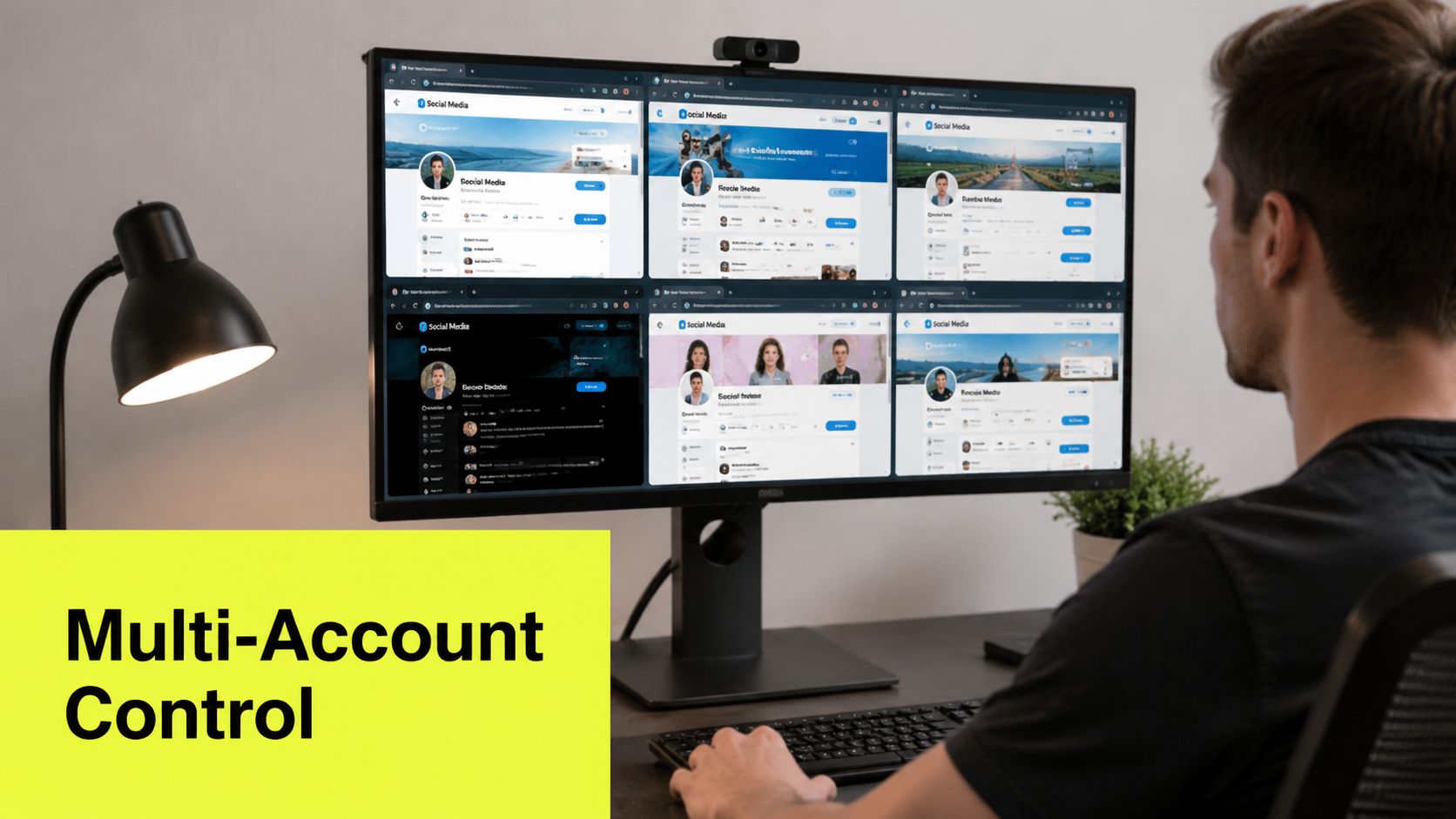
If you're running multiple Facebook or TikTok accounts, proxy rotation without fingerprint isolation won't hold up. The proxy controls network identity. The antidetect browser controls the rest of the browser-visible identity.
Why proxy rotation and browser fingerprints must match
AdsPower, Dolphin Anty, GoLogin, Multilogin, and Hidemyacc exist because platforms don't only look at IPs. They look at browser fingerprints, storage behavior, timezone alignment, language, hardware signals, and how consistent a profile stays over time.
That means one clean browser profile per account cluster. One proxy identity that matches the intended geo. And for login-heavy workflows, a sticky session long enough to preserve continuity. A rotating residential pool is great, but if it flips the IP while you're inside Facebook Business Manager, the browser profile won't save you from the mismatch.
For Chrome-based manual setups, Sota Proxy's guide on using a proxy in Chrome browser is a decent reference when you're testing outside full antidetect stacks.
A clean setup flow in antidetect browsers
In AdsPower, the workflow is straightforward:
- Create a new profile: Start with a fresh browser fingerprint. Don't clone a bad profile and expect the proxy to fix it.
- Select proxy type: Choose HTTP or SOCKS5 based on your provider and tooling.
- Paste credentials: Host, port, username, and password go into the proxy section.
- Verify connection: Confirm the IP geo matches the account's intended region before login.
- Keep session policy stable: For ad accounts and account farming, use sticky sessions instead of per-request rotation.
The same logic applies in GoLogin, Multilogin, Dolphin Anty, and Hidemyacc. The UI labels differ, but the principles don't.
Browser fingerprints and IP identity have to tell the same story. If one says Texas and the other behaves like a server farm in another region, the account pays for it.
A visual walkthrough helps if you're onboarding operators or VAs:
For account farming, don't over-rotate. Build habits that resemble stable device usage. Warm the account on one fingerprint, one consistent geo, and one controlled sticky network identity.
Best Practices for High-Value Workloads
Rotation isn't a best practice by itself. It's a variable you tune based on what the workload punishes. A key operational question is whether rotating residential is always better than ISP or static proxies for TikTok and Facebook automation. It isn't. The right answer depends on whether the task is session-sensitive, region-sensitive, or rate-limit-sensitive, as discussed in this practical take on rotating residential proxy use cases.
Traffic arbitrage and cloaking
Arbitrage teams usually need two things at once. They need to inspect landing pages and ad paths from the same regions the platform review systems or real users will come from. They also need to avoid hammering those checks from one visible source.
For that job, rotating residential proxies with geo targeting usually fit best. Use local exits when verifying redirects, cloaked offers, prelanders, and ad creatives by region. If you're checking manually inside a browser, keep the session sticky long enough to complete the path exactly as a user would.
Cloaking failures often come from mismatched signals, not from the redirect logic itself. If the proxy says one region and the browser profile suggests another, your verification session won't reflect real delivery.
Account farming for Facebook and TikTok
This is the area where people destroy accounts with the wrong rotation policy. Farming accounts isn't about looking invisible. It's about looking consistent.
Use residential or mobile proxies with long sticky sessions. Keep the same browser profile in AdsPower, Dolphin Anty, GoLogin, Multilogin, or Hidemyacc tied to the same network identity pattern. Don't swap between aggressive per-request rotation and account actions like inbox checks, billing edits, Business Manager navigation, or pixel setup.
What works:
- Stable geo: Match the account story.
- Sticky sessions: Hold the same IP during setup and active use.
- Clean profile separation: One fingerprint container per account or account group.
What breaks:
- Mid-session IP flips
- Reusing one proxy identity across too many unrelated accounts
- Using cheap datacenter IPs on sensitive social targets
Large-scale web scraping
Scraping has a different tolerance profile. Public page collection can handle fast rotation because the target usually doesn't need a stable user identity from one request to the next.
Use per-request rotation for broad collection on protected targets. For simpler sites, datacenter proxies can be enough and often make more economic sense. For tougher targets with stronger anti-bot checks, residential rotation tends to hold up better. If you're mixing scraping with authenticated sessions, split the workloads. Don't use the same rotation policy for login flows and stateless fetches.
Teams scaling these operations also watch margin closely. Partner revenue can offset part of the stack cost. For example, Sota Proxy's affiliate program offers up to 40% commission, which can matter if you're already referring other buyers, farmers, or scraping teams.
Troubleshooting Common Rotation Pitfalls
The biggest mistake is thinking rotation solves detection by itself. It doesn't. Sites correlate more than IPs. They also correlate fingerprints, behavior, and session flow. That's the blind spot many operators miss, and it's covered well in this analysis of IP rotation versus modern bot detection.
When sessions break
If Facebook or TikTok starts challenging sessions mid-use, check stickiness first. A rotating pool used with the wrong session setting can change IPs during login, during a payment action, or while a profile is warming. That looks suspicious even if the IP pool itself is clean.
Then check cookies and browser isolation. If the profile leaks state across accounts, the proxy isn't your main problem.
When rotation doesn't reduce blocks
Persistent CAPTCHAs often point to weak pool quality or the wrong pool type for the target. Datacenter IPs can still work on many jobs, but they struggle on sensitive sites where residential or mobile identity carries more trust.
DNS handling can also create odd mismatches in some setups, especially when the browser resolves traffic differently from the proxy path. If that part of your stack is unclear, Sota Proxy's article on what proxy DNS means in practice helps frame what to inspect.
Fast rotation won't save a dirty fingerprint. Sticky sessions won't save a bad geo story.
A practical checklist
Run this list before blaming the platform:
- Proxy type: Are you using residential for Facebook or TikTok instead of low-trust datacenter IPs?
- Session policy: Does the task require sticky behavior instead of per-request rotation?
- Geo consistency: Does the proxy location match the account profile, timezone, and intended audience?
- Fingerprint hygiene: Is the browser profile clean in AdsPower, GoLogin, Multilogin, Dolphin Anty, or Hidemyacc?
- Pool quality: Are the exits already burned or overused for that target?
- Behavior pattern: Are operators moving too fast, opening too many assets, or reusing flows that look automated?
Get those six right and proxy IP rotation starts doing what it's supposed to do. It stops being a vague anti-blocking feature and becomes a predictable control inside your account and traffic stack.
If you're running ad accounts, account farms, scraping jobs, or geo-targeted verification at scale, Sota Proxy gives you the proxy types and rotation controls that matter in real operations: residential, mobile, ISP, datacenter, sticky sessions, and targeted locations for browser-based and programmatic workflows.
Related articles

7 Data Collection Methods for Media Buyers & Farmers
Explore top data collection methods for media buyers. Learn to leverage scraping, APIs, and surveys for ad accounts, account farming, and geo-targeting.
Competitor Price Tracking: Technical Guide 2026
Build a robust competitor price tracking system. This guide covers scraping architecture, residential proxies, anti-bot evasion, and data pipelines.

Rotating Proxy Server: Mastering Techniques for 2026
Master rotating proxy servers for farming, ad verification & scraping. Learn architecture, rotation, & anti-detection tactics.
How to Test a Proxy Before You Buy It: A 10-Minute Checklist
Ten checks that tell you whether a proxy trial is worth paying for: exit ASN, hosting flags, rotation behaviour, subnet spread, DNS and WebRTC leaks, and success rate on your own target.

How to Make Money With Web Scraping in 2026: Five Models, Priced
Five ways scrapers get paid, what each one charges, and what a scrape actually costs to run, measured on real pages: HTML-only against a full browser render.

10 Smartproxy Alternatives for Technical Teams
Compare 10 smartproxy alternatives by proxy type, IP quality, targeting, rotation, speed, pricing, and use case for technical teams.